Animal Care
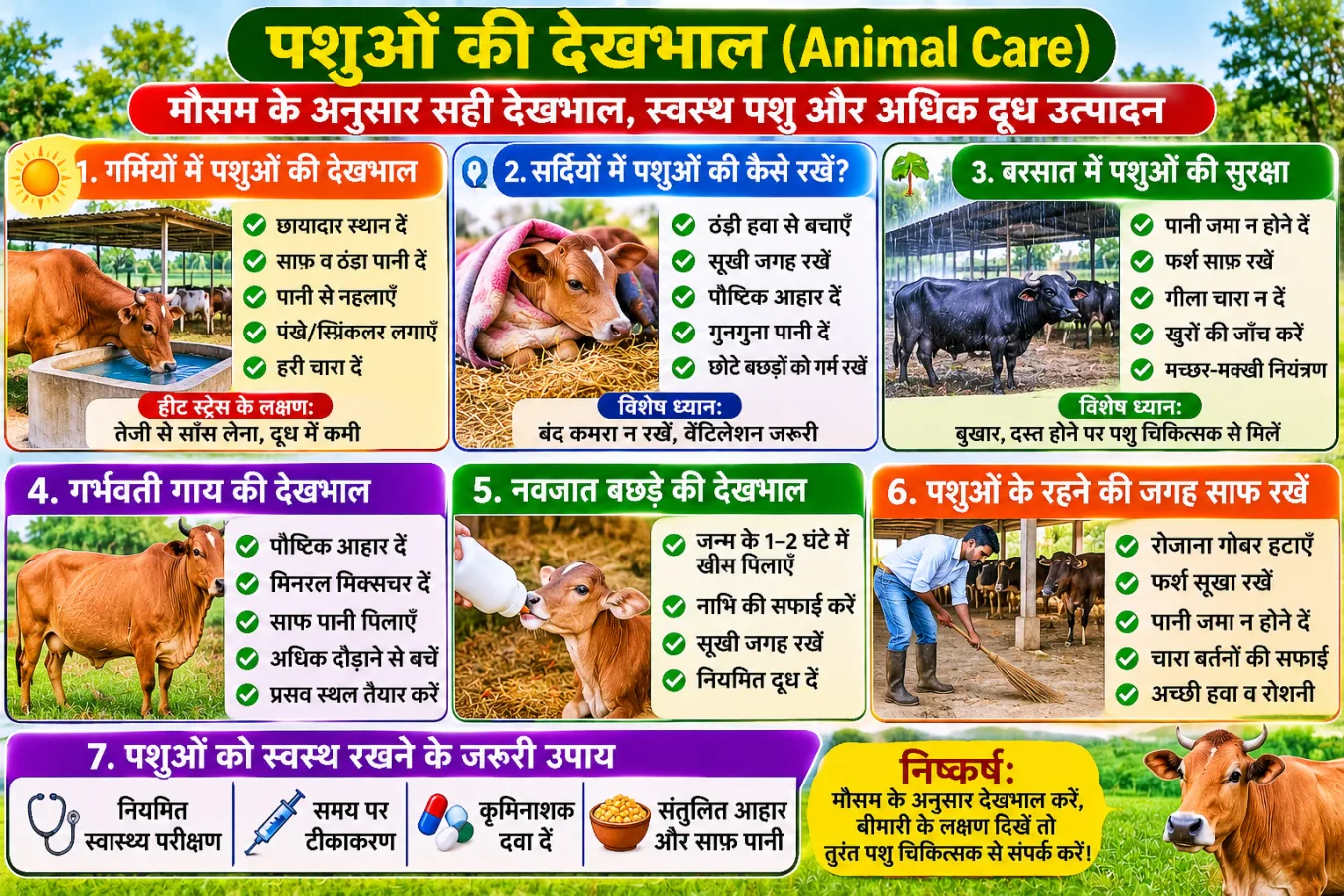
- Caring for Animals During Summer During summer, high temperatures can cause heat stress in cows and buffaloes. This may reduce their appetite and negatively affect milk production.
Important things to keep in mind during summer:
- Keep animals in a shaded and well-ventilated area to protect them from direct sunlight.
- Always provide clean and cool drinking water.
- Bathe animals with water when necessary, especially buffaloes, to help them stay cool.
- Arrange fans or water sprinklers in the animal shed.
- Avoid taking animals out for grazing during the hottest hours of the afternoon.
- Provide green fodder and a balanced animal feed.
- During summer, it is better to feed animals early in the morning and late in the evening.
- Avoid overcrowding animals in the shed. Symptoms of Heat Stress:
- Rapid breathing and excessive panting.
- Drinking water frequently.
- Reduced appetite and milk production.
- Excessive salivation and weakness. If an animal is panting excessively or its condition is getting worse, contact a veterinarian immediately.
- How to Care for Animals During Winter During winter, small calves, weak animals, and pregnant cows require special attention. Extremely cold weather and cold winds can cause pneumonia and other health problems in animals.
Important things to keep in mind during winter:
- Protect animals from cold air and strong winter winds.
- Ensure proper lighting and ventilation in the animal shed.
- Keep animals in a dry place at night.
- Provide dry bedding, such as straw or dry grass, for young calves.
- Give animals a balanced diet and sufficient green fodder.
- Avoid giving extremely cold drinking water; provide clean water at normal temperature.
- If required, provide warm clothes or covers to young and weak calves under veterinary guidance.
- Do not allow animals to remain on wet floors for long periods. Special Note: Do not keep animals in completely closed rooms. Proper ventilation is essential because closed and damp spaces can increase the risk of respiratory diseases.
- Protecting Animals During the Rainy Season During the rainy season, moisture, mud, and dirt increase in animal sheds. This can increase the risk of skin diseases, hoof problems, intestinal worms, and other infections.
Important things to keep in mind during the rainy season:
- Do not allow water to accumulate inside the animal shed.
- Try to keep the floor clean and dry.
- Do not allow animals to stand in muddy areas or dirty water.
- Check the animals' hooves regularly.
- Store fodder and hay in a dry place.
- Never feed animals wet, rotten, or fungus-infected fodder.
- Take measures to control mosquitoes, flies, and parasites in the animal shed.
- Do not allow animals to drink contaminated water from ponds or drains.
- Arrange vaccinations and deworming medicines according to the advice of a local veterinarian. Special Note: The risk of diseases in animals may increase during the rainy season. If an animal develops fever, diarrhoea, lameness, or stops eating, consult a veterinarian as soon as possible.
- Caring for a Pregnant Cow Proper care of a pregnant cow is very important because it directly affects the health of both the cow and the calf to be born.
Methods of caring for a pregnant cow:
- Provide the cow with a balanced and nutritious diet.
- Give green fodder, dry fodder, and animal feed in appropriate quantities.
- Arrange mineral mixture and calcium supplements according to veterinary advice.
- Provide clean and sufficient drinking water.
- Do not keep the cow in slippery or dirty areas.
- Avoid making the cow run or travel long distances during the final stage of pregnancy.
- During the last stage of pregnancy, keep the cow in a clean, peaceful, and comfortable place.
- Prepare a separate area for calving before the expected delivery date.
- Consult a veterinarian regarding vaccinations and medicines during pregnancy. Common Signs That a Cow Is About to Give Birth:
- Enlargement of the udder.
- Swelling around the vaginal area.
- Loosening of the area around the tail.
- Restlessness and repeatedly getting up and lying down.
- Discharge of sticky fluid from the vagina. If the cow experiences difficulty during delivery, excessive bleeding, or continues straining for a long time without delivering the calf, call a veterinarian immediately.
- Caring for a Newborn Calf The first few days of a newborn calf's life are extremely important. Proper care during this period helps improve the calf's immunity and supports its future health.
Essential Methods of Caring for a Newborn Calf:
-
Checking Breathing: Immediately after birth, check whether the calf is breathing normally. If necessary, seek help from a trained person or veterinarian.
-
Cleaning the Body: Wipe the calf's body with a clean, dry cloth. Normally, the mother cow also licks the calf to clean it.
-
Colostrum (First Milk): Feed the calf the mother's first thick milk, known as colostrum, within the first 1–2 hours after birth. It is extremely important for protecting the calf against diseases.
-
Navel Care: Keep the navel clean and disinfect it using an appropriate antiseptic as advised by a veterinarian.
-
Clean Shelter: Keep the calf in a clean, dry, and safe place.
-
Regular Milk Feeding: Provide sufficient milk during the initial days according to the calf's age and body weight.
-
Water and Feed: Introduce clean drinking water at the appropriate age and provide special calf starter feed.
-
Health Check-up: If the calf shows symptoms such as diarrhoea, fever, coughing, or refusal to drink milk, contact a veterinarian immediately.
Special Note: Colostrum is the most important natural source of nutrition for a newborn calf. Feeding it should not be delayed. 6. How to Keep the Animal Shelter Clean Maintaining cleanliness in the animal shelter is one of the most important steps in keeping animals healthy. Flies, mosquitoes, and harmful germs can multiply quickly in dirty and damp animal shelters.
Important Methods for Cleaning the Animal Shelter:
- Remove dung and urine every day.
- Do not allow water to accumulate on the floor.
- Keep the areas where animals sit and sleep dry.
- Clean water tanks and feed containers regularly, preferably every week.
- Do not allow drinking water and feed containers to become dirty.
- Ensure proper lighting and ventilation in the animal shelter.
- Collect dung in a designated place and convert it into manure using proper methods.
- Maintain cleanliness to control flies and mosquitoes.
- Separate sick animals from healthy animals whenever necessary.
- Disinfect the animal shelter periodically using safe methods recommended by a veterinarian.
- Important Tips for Keeping Animals Healthy
- Arrange regular health check-ups for animals.
- Ensure timely vaccination.
- Give deworming medicines according to veterinary advice.
- Provide a balanced diet and clean drinking water.
- Separate sick animals from healthy animals.
- Pay attention to changes in an animal's behaviour, appetite, and milk production.
- Do not give medicines without consulting a veterinarian.
- Keep newly purchased animals separate for some time and arrange a health check-up before introducing them to the existing herd. Conclusion To achieve success in animal husbandry, it is essential not only to provide good-quality food but also to take proper and regular care of animals. During summer, special attention should be given to keeping animals cool. During winter, they should be provided with a warm and dry shelter. During the rainy season, cleanliness and protection against infections are particularly important.
Even a small amount of negligence in caring for pregnant cows and newborn calves can lead to serious problems.
Therefore, every livestock farmer should take care of animals according to the changing seasons and consult a veterinarian promptly whenever symptoms of illness appear.