Common Cattle Diseases: Symptoms, Prevention and When to Call a Vet
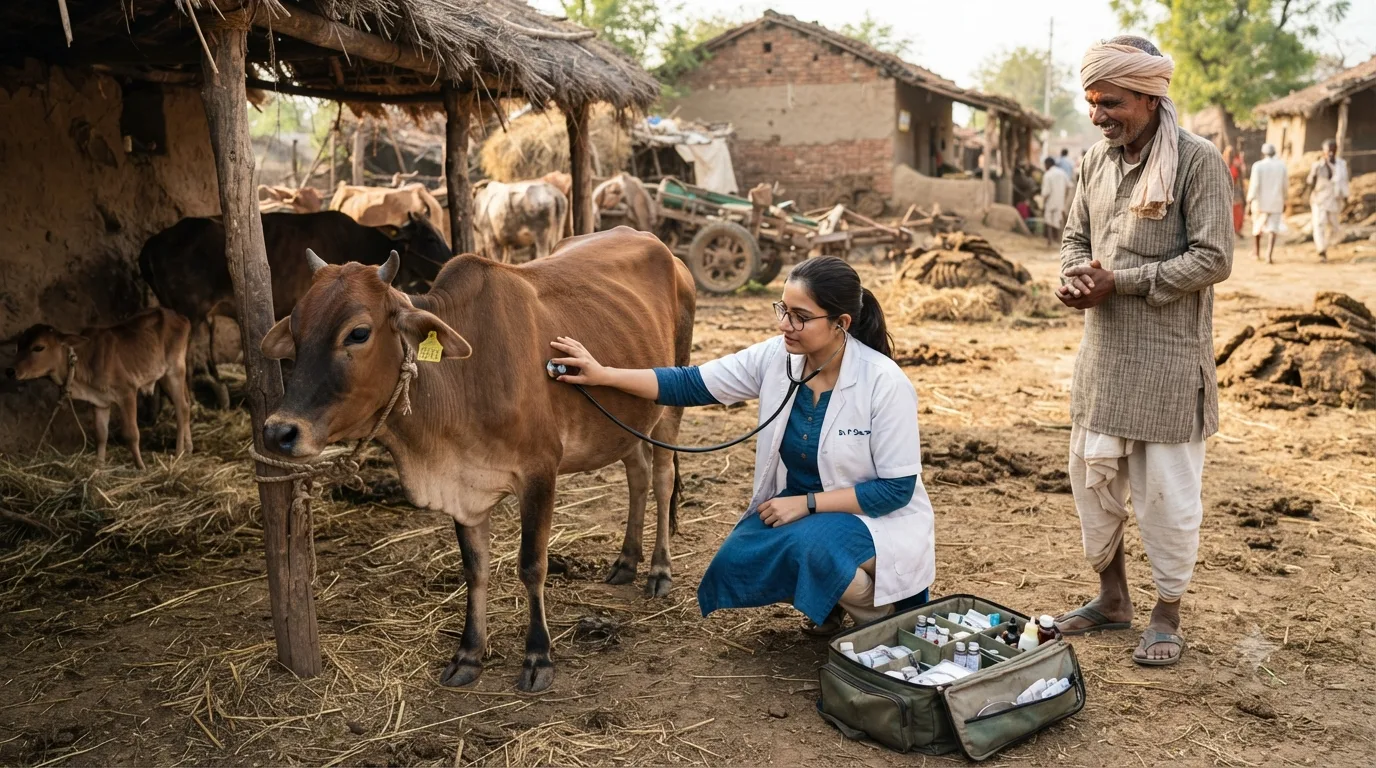
Animals cannot speak, so it is our responsibility to recognise the early signs of illness. The sooner treatment begins, the smaller the loss.
-
Foot-and-Mouth Disease (FMD) Symptoms: High fever, blisters in the mouth and on the hooves, drooling, loss of appetite, limping. Prevention: Timely vaccination is the most important step. Separate a sick animal immediately.
-
Mastitis Symptoms: Swelling, heat and pain in the udder, clots or blood in the milk, falling milk yield. Prevention: Keep the udder clean after milking and keep the shed dry. See a vet as soon as symptoms appear.
-
Haemorrhagic Septicaemia (Galghotu) Symptoms: High fever, swelling in the throat, difficulty breathing. It spreads more during the monsoon. Prevention: Get the vaccine before the rainy season. This disease can be fatal, so do not delay.
-
Bloat (Afara) Symptoms: Swelling of the left side of the belly, restlessness, fast breathing. It is often caused by eating too much green fodder, especially wet berseem or sorghum. Prevention: Change fodder gradually and do not suddenly feed a hungry animal a large amount of green fodder. In severe cases, call a vet immediately.
-
Diarrhoea and Calf Diseases Diarrhoea is very common in calves and weakness sets in quickly. Maintain cleanliness and always feed colostrum (the first milk).
-
Parasites (Worms, Ticks, Lice) These weaken the animal and reduce milk yield. Give medicine at regular intervals on a vet's advice and keep the shed clean.
When to See a Vet Immediately
- High fever, or the animal completely stops eating and drinking
- Difficulty breathing
- Blood in the milk, or milk stops suddenly
- The animal cannot stand up
Caution Do not delay treatment of a serious illness by relying on home remedies, and do not decide medicine doses yourself without a vet's advice.
Conclusion Prevention is cheaper than cure. A clean shed, balanced feed and timely vaccination can prevent most diseases. Find veterinarians in your area in the "Doctor" section of gavbazar.