How to Identify a Buffalo Breed: Easy Guide Using Horns, Colour, Eyes and Tail
Also available in: हिन्दी
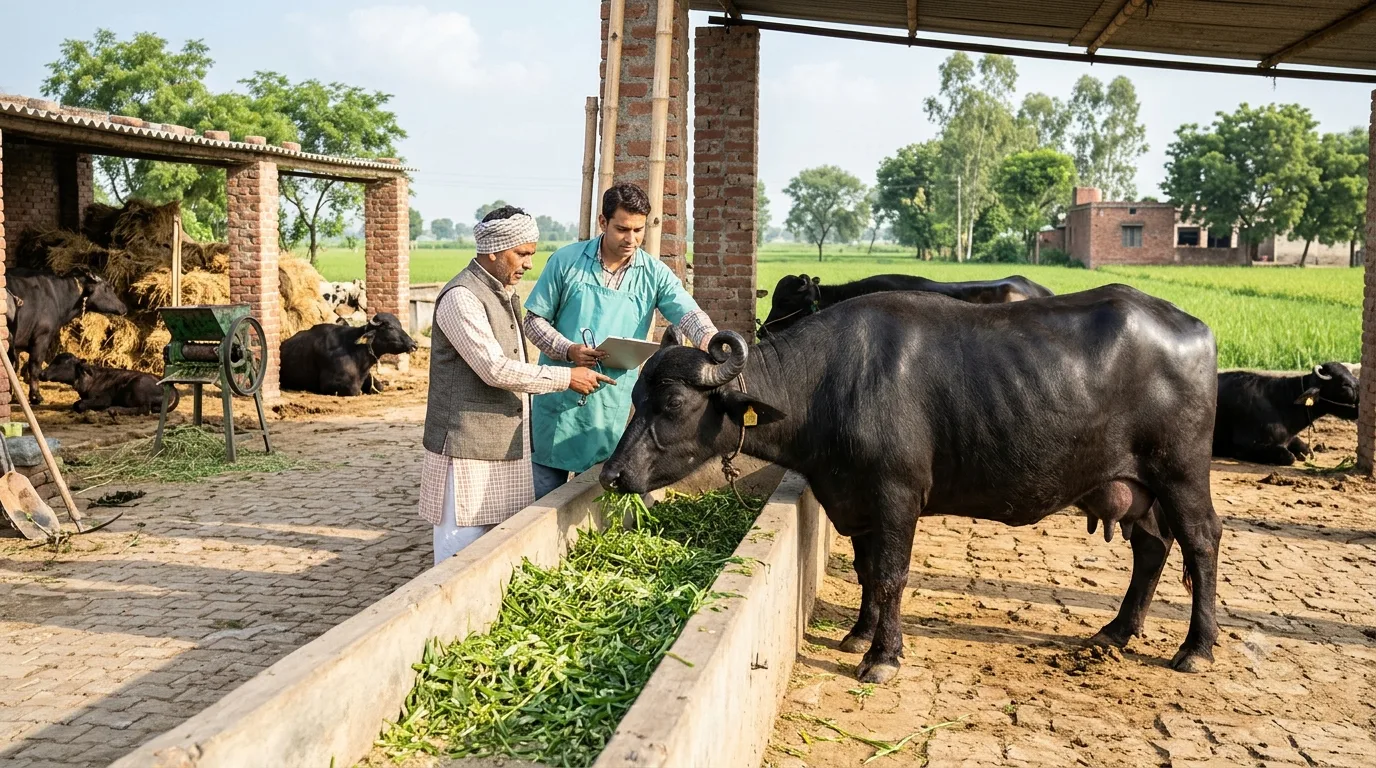
A wrong breed identification can cost you in both milk and price. Here are some simple signs.
- Colour Deep black: Murrah, Jaffarabadi, Pandharpuri. Copper-brown or lighter: Bhadawari. Black-brown: Surti, Mehsana.
- Horns Short, tightly curled: Murrah, Nili-Ravi. Heavy, broad, drooping near the neck: Jaffarabadi. Flat, sickle-like: Surti. Very long, sword-like, curved back: Pandharpuri, Nagpuri.
- White Markings White on forehead, muzzle, legs and tail tip: Nili-Ravi. Two white bands on the neck: Surti (and sometimes Bhadawari).
- Eyes
A pale bluish-white shine in the eyes is a sign of Nili-Ravi.
- Body and Udder Heavy, very large body: Jaffarabadi. Compact, medium body: Bhadawari, Surti. A large udder with four even quarters and prominent milk veins is the sign of a good milker. How to Avoid Being Cheated Many buffaloes are of mixed breed, so do not accept a breed as certain from one sign. If sold as "pure Murrah", ask for the mother's milk record and the animal's lineage. Do not trust the seller's stated milk yield. Get it milked morning and evening in front of you. Take an experienced person or a veterinarian along. Conclusion
Identify breed by combining several signs, not just one. Browse the "Animals" section of gavbazar and find a vet in your area in the "Doctors" section.
Disclaimer: This information is based only on experience and is for general awareness. Please consult a veterinarian or agriculture expert before making any decision about your animals or crops. gavbazar will not be liable for any loss arising from its use.