Major Breeds of Chickens and Ducks for Farming – Identification, Temperament, and Characteristics
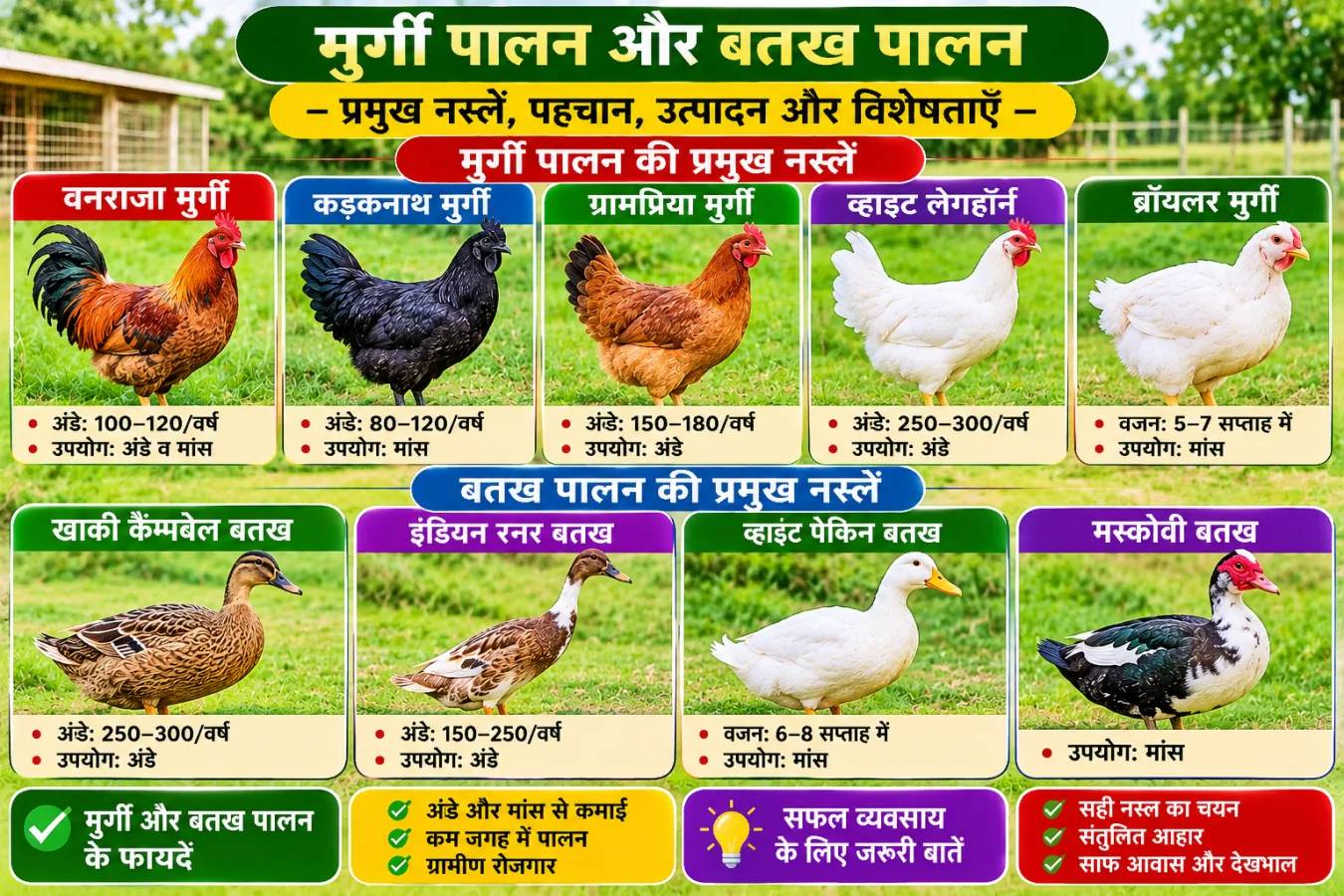
- Poultry Farming (Chicken Farming) Poultry farming is a popular business in India. Chickens are mainly raised for egg and meat production. With proper arrangements, poultry farming can be started even in a small space. It can also become a good source of additional income in rural areas. Major Chicken Breeds 1.1 Vanaraja Chicken Vanaraja is a useful dual-purpose chicken breed developed in India. It is raised for both egg and meat production. It is considered suitable for rural and free-range farming environments.
Main Characteristics:
- Its colour can generally be a mixture of brown, red, and black.
- It has a strong body of medium to large size.
- Its legs are strong.
- It can search for food in an open environment.
- Its body may be larger than that of ordinary native chickens. Temperament and Behaviour:
- Generally active and alert.
- Likes roaming in open spaces.
- Prefers living in a flock.
- Can run quickly when it senses danger. Production: With proper care, it can produce approximately 100–120 eggs per year. Production may vary depending on management and the breed line.
Advantages:
- Useful for both egg and meat production.
- Suitable for farming under rural conditions.
- Can be raised in an open environment.
- Useful for general poultry farming. Disadvantages:
- A balanced diet is necessary for good growth.
- Regular vaccination and health care are essential.
- Protection from predators is necessary in open farming environments. 1.2 Kadaknath Chicken Kadaknath is a famous native chicken breed of Madhya Pradesh. It is known for its black colour, dark meat, and distinctive appearance. It is mainly raised for meat production and, to some extent, egg production.
Main Characteristics:
- Its body and feathers are mainly black.
- Its skin and meat are also dark in colour.
- It has a medium-sized body.
- Its legs and beak are dark in colour.
- It can adapt well to native farming environments. Temperament and Behaviour:
- Generally active and alert.
- Likes roaming in open spaces.
- Can run quickly when it senses danger.
- Prefers living in a flock. Production: With good care, it can produce approximately 80–120 eggs per year.
Advantages:
- Its distinctive meat gives it a special identity in the market.
- Useful for native chicken farming.
- Can be raised in an open environment.
- Has the potential to fetch a good price in specialised markets. Disadvantages:
- It may take longer to gain weight compared to commercial broiler chickens.
- Good-quality chicks may be difficult to find in some areas.
- Proper customers and market demand are necessary for selling the birds. 1.3 Gramapriya Chicken Gramapriya is a chicken variety developed in India and is useful for egg production. It is raised in rural areas to obtain eggs.
Main Characteristics:
- Its colour is generally a mixture of brown and red.
- It has a medium-sized body.
- Its legs are strong.
- It can be raised in open and semi-open environments.
- Egg production is its main characteristic. Temperament and Behaviour:
- Generally active and calm.
- Prefers living in a flock.
- Frequently moves around in search of food.
- Becomes alert when it senses danger. Production: With proper care, it can produce approximately 150–180 eggs per year.
Advantages:
- Useful for egg production.
- Can be raised in rural areas.
- Can search for food in open environments.
- Suitable for small-scale farming businesses. Disadvantages:
- Regular and balanced feeding is necessary.
- Adequate lighting and clean water are required for egg production.
- Vaccination is necessary to prevent diseases. 1.4 White Leghorn Chicken White Leghorn is one of the world's most famous egg-laying chicken breeds. It is mainly raised for commercial egg production.
Main Characteristics:
- It has white feathers.
- Its body is light and medium-sized.
- Its comb is generally red.
- Its legs are yellow.
- It lays white eggs. Temperament and Behaviour:
- Active and energetic.
- Becomes alert quickly.
- Can live with other chickens.
- Sometimes it may be nervous and restless. Production: Under proper commercial management, it can produce approximately 250–300 eggs per year.
Advantages:
- Has excellent egg production capacity.
- Due to its low body weight, its food requirements may be relatively lower.
- Useful for commercial egg production.
- Can provide a regular supply of eggs. Disadvantages:
- It is not particularly suitable for meat production.
- A balanced diet is necessary for egg production.
- Heat and stress can affect its production.
- Regular health management is essential. 1.5 Broiler Chicken Broiler chickens are commercial chickens specially developed for meat production. They grow quickly and are generally prepared for the market at a young age.
Main Characteristics:
- They have a broad and heavy body.
- Their chest and muscles are well developed.
- Their feathers may be white or light-coloured.
- Their legs are strong.
- They have the ability to gain weight quickly. Temperament and Behaviour:
- Generally calm.
- Spend most of their time eating and resting.
- Can become stressed when kept in overcrowded conditions.
- Require a clean and well-ventilated environment. Production: Under good management, they can reach marketable weight in approximately 5–7 weeks. Their actual weight depends on the breed, feed, and management.
Advantages:
- Meat can be produced in a short period.
- Useful for commercial poultry farms.
- There is market demand for chicken meat.
- Large-scale production is possible. Disadvantages:
- Proper temperature and ventilation management are essential.
- Overcrowding increases the risk of disease transmission.
- Special attention must be given to feed quality.
- Market price fluctuations can affect profits.
- Duck Farming Duck farming is also a useful business in rural areas. Ducks are mainly raised for egg and meat production. They prefer living near water and, in many conditions, can tolerate more moisture than chickens. However, they also need a clean and dry place to rest. Major Duck Breeds 2.1 Khaki Campbell Duck Khaki Campbell is one of the world's most famous egg-laying duck breeds. It is mainly raised for egg production.
Main Characteristics:
- Its colour is a mixture of khaki, brown, and light black.
- It has a medium-sized body.
- Its neck is of medium length.
- Its beak is generally dark in colour.
- Female ducks are famous for their egg production. Temperament and Behaviour:
- Generally active and calm.
- Likes swimming in water.
- Moves around in search of food.
- Prefers living in a flock. Production: With proper care, it can produce approximately 250–300 eggs per year.
Advantages:
- Has good egg production capacity.
- Can be raised on both small and large scales.
- Can live both on land and in water.
- Useful for egg production businesses. Disadvantages:
- A balanced diet is necessary for egg production.
- A regular supply of clean water is essential.
- The risk of disease may increase in dirty and overcrowded places. 2.2 Indian Runner Duck Indian Runner ducks are famous for their upright posture and egg production. Their bodies appear more upright compared to those of ordinary ducks.
Main Characteristics:
- They have long and slender bodies.
- Their necks are long.
- Their bodies remain almost upright.
- Their colours may include white, brown, black, or mixed patterns.
- Their legs are strong. Temperament and Behaviour:
- Very active and agile.
- Prefer walking on land.
- Move around extensively in search of food.
- Prefer living in a flock. Production: With proper care, they can produce approximately 150–250 eggs per year.
Advantages:
- Useful for egg production.
- Can help by eating insects and small creatures.
- Can be raised in open environments.
- Can be raised in different climates with proper management. Disadvantages:
- A secure enclosure is needed because they are highly active.
- Eggs need to be collected regularly.
- Balanced feed and clean water are essential. 2.3 White Pekin Duck White Pekin is one of the world's most famous duck breeds for meat production. It has a heavy body and white feathers.
Main Characteristics:
- It has white feathers.
- Its beak is orange.
- Its legs are orange.
- It has a broad and heavy body.
- Its chest and muscles are well developed. Temperament and Behaviour:
- Generally calm and friendly.
- Prefers living in a flock.
- Likes swimming in water.
- Requires regular feeding and resting. Production: Under good management, it can reach marketable weight in approximately 6–8 weeks. Its actual weight depends on the breed and farming system.
Advantages:
- Has good meat production capacity.
- Gains weight quickly.
- Useful for commercial duck farming.
- There may be market demand for its meat. Disadvantages:
- Requires adequate space because of its larger body size.
- A balanced diet is essential.
- Clean and dry housing is necessary.
- Cooling arrangements and water facilities are important during summer. 2.4 Muscovy Duck Muscovy ducks look different from other common duck breeds. They have raised red skin on their faces. They are mainly raised for meat production.
Main Characteristics:
- Their colour may be black, white, or mixed.
- They have raised red skin on their faces.
- Their bodies are strong and heavy.
- Their wings are large and strong.
- Male ducks can be considerably larger than females. Temperament and Behaviour:
- Generally calm.
- May behave somewhat differently from other ducks.
- Likes roaming in open environments.
- Can become aggressive when it senses danger. Production: They are mainly raised for meat production. Their egg production is generally lower than that of egg-laying breeds such as Khaki Campbell.
Advantages:
- Useful for meat production.
- Have strong bodies and good growth potential.
- Can be raised in open environments.
- Under certain conditions, they have a good natural ability to hatch their eggs. Disadvantages:
- There can be a significant size difference between males and females.
- Attention must be given to breeding and flock management.
- Safe and clean housing is essential.
- Adequate space should be provided when keeping them with other ducks.
-
Difference Between Chicken Farming and Duck Farming Feature Chicken Farming Duck Farming Main Purpose Egg and meat production Egg and meat production Housing Dry and well-ventilated place Dry resting area and clean water Water Requirements Clean drinking water Sufficient water for drinking and cleaning their bills Feed Poultry feed, grains, and supplementary feed Duck feed, grains, and suitable supplementary feed Eggs White or brown, depending on the breed White, light green, or other colours, depending on the breed Farming Suitable for small and large-scale farming Suitable for small and large-scale farming
-
Important Things to Consider for Chicken and Duck Farming
- Choose the right breed according to your farming purpose.
- Provide suitable temperatures to chicks and ducklings during their early stages.
- Arrange clean and well-ventilated housing.
- Provide balanced feed according to their age.
- Ensure clean drinking water is available at all times.
- Follow regular vaccination schedules and consult a veterinarian.
- Keep sick birds separate from healthy birds.
- Clean the poultry and duck enclosures regularly.
- Do not introduce new birds directly into an existing flock.
- Before selling eggs and meat, understand the local market demand.
- Advantages of Chicken and Duck Farming Advantages of Chicken Farming:
- Provides income opportunities through both eggs and meat.
- The business can be started on a small scale.
- Broiler chickens produce meat in a short period.
- Different breeds are available for egg production.
- Provides employment opportunities in rural areas. Advantages of Duck Farming:
- Useful for both egg and meat production.
- Some breeds have excellent egg production capacity.
- Ducks can live both on land and in water.
- They can search for food in open environments.
- Can be a useful business in rural areas and regions with water bodies.
- Disadvantages of Chicken and Duck Farming
- If a disease spreads, several birds may be affected at the same time.
- Regular feeding and health care are necessary.
- Proper temperature management is essential during summer and winter.
- Market prices of eggs and meat may fluctuate.
- Maintaining cleanliness and biosecurity involves additional costs.
- Before starting the business, it is important to understand the market and make proper selling arrangements.
Conclusion Both chicken farming and duck farming can provide good income and employment opportunities in rural areas. If your goal is to obtain more eggs, breeds such as White Leghorn or Khaki Campbell may be useful. For meat production, Broiler chickens or White Pekin ducks can be considered. For native and dual-purpose farming, chickens such as Vanaraja and Kadaknath may be useful.
Choosing the right breed, providing balanced feed, maintaining clean housing, ensuring regular health care, and understanding the market are the most important factors for running a successful farming business.